Mandate Order Walls and Siege Warfare
Fortify your stronghold, defend against engines, and keep supply lines alive during real-time sieges
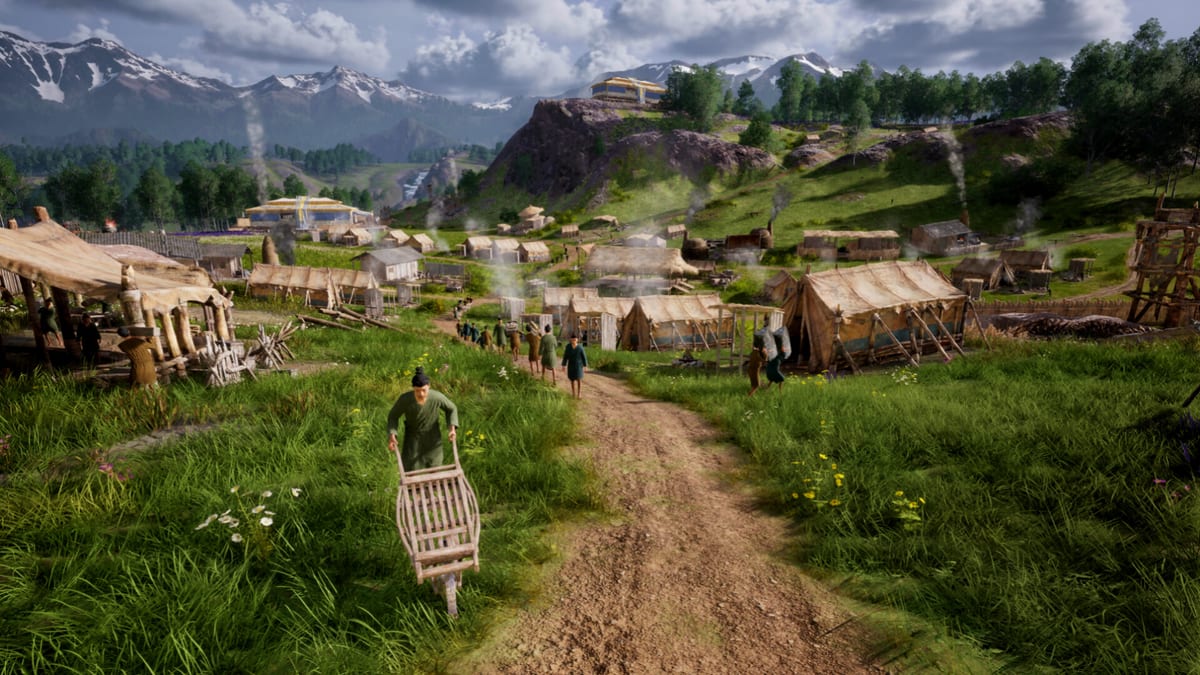
Fortifications in Mandate Order are both construction projects and real-time combat terrain. Digital Sky showcases walls, gates, towers, and siege engines in the same continuous simulation where couriers haul stone, workshops forge weapons, and retainers shape long-term doctrine. A siege is therefore a timed exam of your build choices: if ore never reached workshops, if archers lack bows in the armory, or if roads bend around the long way, walls fall for reasons clearer than random dice rolls.
This guide covers defensive construction, siege assault behavior shown in previews, and logistics that keep repairs and reinforcements flowing. Pair it with formations and line drawing for troop placement and production chains for stone and timber supply.
Walls as staged construction
Freeform build lets you follow terrain when raising wall segments, but good players still think in rings and chokepoints from city layout and map guides. Early palisades may protect wells and warehouses; mid-game stone walls encircle industry; late rings secure outer farms only when you can patrol them.
Key planning rules:
- Anchor walls on cliffs and rivers to shorten segments you must man.
- Leave deliberate gate spacing so enemies cannot focus one inevitable hole you forgot to tower.
- Reserve interior muster yards behind gates for formation lines.
- Place stairs and towers where archers gain elevation without crossing entire city loops.
The buildings reference lists wall types, tower upgrades, and gate variants as Early Access documentation solidifies.
Gates, towers, and defensive equipment
Gates are the flexible part of any wall line. They must open for couriers during peace and close under assault. Previews show defensive equipment such as arrow slits, murder holes, or engine mounts depending on era-appropriate structures—exact names may change in patches, but the role is consistent: channel attackers into kill zones while ranged units fire from cover.
Towers extend line-of-sight and give archers safer positions than crenellated ground walks alone. When drawing formations from formations and line drawing, prioritize tower platforms for high-value ranged lines.
Do not wall every resource node immediately. Instead, wall what you can defend with the army your armory actually equips.
Siege engines and assault behavior
Trailers and official copy highlight dynamic siege warfare: battering rams, towers, and other engines approach walls while defenders respond in real time. Engines force decisions beyond standing on a line:
- Focus fire from archers on engine crews and platforms.
- Sally forth with polearm infantry to destroy exposed rams if risk is acceptable.
- Shift reserves to the threatened face before the gate timer breaks.
- Repair segments during lulls if workers and stone arrive via couriers.
Engines interact with terrain. Slopes, moats if present, and approach roads from map design determine how long you have to respond. Use that time to fix logistics, not only to redraw lines.
Breaches, collapses, and interior fighting
When walls or gates fail, combat does not teleport to a separate screen. Enemies pour through breaches; interior muster zones become melee chaos. Prepare:
- Inner fallback lines at barracks courtyards or second gate rings.
- Pre-stocked armory lanes near inner keeps so reinforcements re-equip without crossing broken outer roads.
- Separate courier routes that do not require leaving the city through the breached gate.
Preview narratives note players losing not because enemies were unstoppable but because archers never reached the wall in time or earlier conscription drained labor from weapon delivery. Treat breaches as logistics alarms.
Stone, timber, and repair chains
Wall segments consume stone and timber from the same non-global logistics model as weapons. Repair during sieges competes with weapon freight for couriers. Before war:
- Stock construction depots near likely breach faces.
- Configure freight stations to prioritize repair materials when alerts trigger, if UI allows rule sets.
- Protect courier roads; losing a bridge can halt repairs more completely than losing a farm field.
See warehouses and storage for moving bulk goods under pressure.
Defenders, gear mix, and conscription timing
Wall defense wants archers on walks, polearms at chokepoints, and shields stabilizing gate mouths. Mix details live in troop types. Conscript defenders before the siege if gear exists; mid-siege mass conscription steals workers from repairs and hauling.
Maintain a garrison rotation if morale systems penalize endless wall duty. Retainers assigned to armies or admin buildings may alter garrison efficiency or supply consumption.
Sally ports and counterattacks
Some layouts include sally ports for sorties that hit siege camps or engines. Sorties are high risk: a failed sally loses troops outside walls; a successful one buys time for repairs. Only sally when inner reserves still hold a second line and armories can re-equip returnees.
Coordinate sally timing with enemy engine reload or troop clustering shown in preview footage patterns, not guesswork.
Siege versus open field defense
Not every fight is a formal siege. Raids may hit outer farms or courier roads first. Walls still matter by protecting core warehouses and armories even if fields burn temporarily. Decide whether to expand walls outward or accept economic losses—both are strategic choices tied to guides economy advice.
Open field battles after failed sieges use the same units but different formation doctrine; see combat hub for overview links.
Early Access and roadmap context
Mandate Order enters Early Access around August 12, 2026 with fortification and large battles already advertised. Post-launch roadmap statements mention deeper terrain, recovery, and defense stages rather than purely cosmetic map swaps. Wall meta may evolve as new structures ship.
Document your own replay lessons: which gate fell, whether stone ran out, whether archers lacked kits. Future tools may log these; notes suffice for now.
Checklist before accepting a siege
- Outer face towers cover approach roads.
- Gate interiors have muster space and reserve groups assigned.
- Armory stock covers garrison plus one reinforcement wave.
- Construction depots and couriers can reach threatened segments.
- Freight priorities distinguish repair stone from luxury goods.
- Fallback line drawn mentally or on map for breach scenarios.
Related guides
- Units overview for garrison sizing.
- Formations and line drawing for wall lines.
- City layout for ring planning.
- Build hub for industrial prerequisites.
Walls in Mandate Order fail loudly when logistics whispered warnings you ignored. Listen before the ram hits the gate.
Frequently Asked Questions
Quick answers drawn from Early Access systems and common player questions.
Can enemies destroy walls in Mandate Order?
Yes. Previews show dynamic sieges where engines and assault troops can breach gates and wall segments, leading to real-time fighting inside the city.
Do walls require logistics to repair?
Yes. Stone, timber, and other materials move through warehouses and couriers like any other goods. Repair competes with weapon hauling for transport capacity.
What troops defend walls best?
Archers on towers and walks, polearm infantry at chokepoints, and shield units stabilizing gates form the core mix shown in preview siege footage.
Should I wall everything immediately?
Stage walls on chokepoints you can man and supply. Overextended rings expose outer farms and lengthen courier routes without adding defensible value.
Why did my gate fall with soldiers available?
Common causes include late reinforcements, gear shortages in the armory, bottlenecks at stairs and gates, or repair materials not reaching the segment under attack.