Mandate Order Production Chains
Link mines, workshops, warehouses, armories, and conscription into one visible supply loop
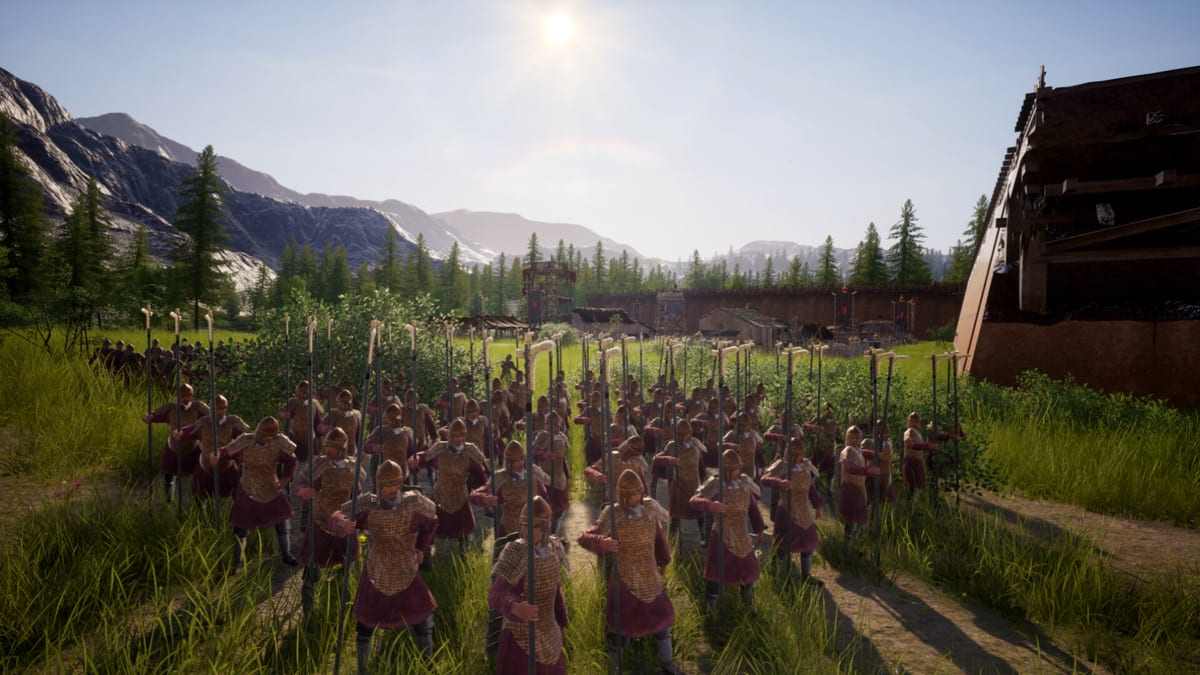
In Mandate Order, production is never a abstract plus icon on a menu. Digital Sky built a Warring States city-builder where ore must reach workshops, workshops must output polearms, bows, shields, and armor, and finished gear must sit in armories before workers become defined troop types. If any hop fails, your city can look rich on a spreadsheet yet field no defenders when siege engines reach the gate. This guide explains production chains as the developer presents them in previews and press materials, with logistics as the glue between buildings.
Chains here are systemic, not optional minigames. They connect directly to combat outcomes, retainers policies, and seasonal food stability from the guides hub.
The core military chain
Official descriptions repeat the same sequence:
- Extract raw materials from map nodes such as ore and timber, using appropriate gather buildings and labor.
- Store materials in warehouses or intermediate stockpiles rather than assuming global inventory.
- Process goods in workshops that consume inputs and produce weapon kits or armor pieces shown in preview footage.
- Deliver finished equipment to an armory using freight stations, couriers, and roads.
- Conscript workers into troop types once the armory holds the required gear.
- Deploy soldiers through barracks and formation commands during raids and sieges.
That full chain is the difference between a city that merely exists and a city that can answer an invasion. Previews explicitly note that failed sieges may trace to ore never reaching workshops or weapons never entering armories, not only to tactical mistakes.
Raw material stage
Maps in Early Access offer frontier terrain with varied resource placement. Mines, logging camps, or equivalent gather structures pull raw goods into local storage. Because Mandate Order avoids global pools, a mine chest full of ore does nothing for a distant smelter until a courier job moves it.
Layout matters at extraction: place gather sites with road access and a warehouse or freight pickup within efficient range. See city layout for district zoning and map guides for node locations on specific scenarios.
Seasonal agriculture runs on a parallel chain: fields produce food that stabilizes population and morale. Starving cities interrupt chains when peasants abandon workshops to hunt meals or when conscription pulls farmers away during harvest.
Workshop processing
Workshops convert inputs into military goods and likely civilian tools. Preview text lists polearms, bows, shields, and armor as explicit outputs feeding conscription. Each workshop needs assigned labor, input stock within range, and outbound freight configured.
Common failure modes at this stage:
- Input warehouses set to low priority so ore never leaves the mine side.
- Single workshop overworked while duplicates lack inputs.
- Labor drained by early conscription or giant construction projects.
- Roads destroyed during raids without alternate routes.
Use the buildings reference for building-specific recipes and upgrade tiers as Early Access documentation expands. When in doubt, watch freight panels: stalled workshops usually show missing inputs or full output buffers.
Storage hops and freight stations
Between every production step, Mandate Order inserts warehouses and freight stations that route supply and demand. A freight station configured to send timber to the wrong workshop starves polearm production even with full forests.
Dedicated intermediate storage helps:
- Raw yard near mines and logging.
- Workshop yard for ingots, planks, and components.
- Armory lane for finished kits awaiting conscription.
The warehouses and storage guide covers demand flags and courier limits. Chains fail when storage is technically full but geographically wrong.
Armory and conscription gate
The armory is the conscription gate. Previews state workers cannot smoothly become specific troop types until required equipment rests in armory storage. That design intentionally ties military scaling to industrial success.
Armory placement should reflect both security and travel time: inside or behind walls, yet reachable from workshops without crossing entire city loops during alerts. Pair armories with barracks so mobilized units muster near gear, not on the far farm ridge.
Troop-specific requirements appear in troop types and units overview. Planning chains means planning mixed gear ratios, not only maximizing one weapon.
Civilian and support chains
Not every chain ends in swords. Wells, housing materials, construction timber, and defensive stone for walls and siege equipment each consume labor and haul capacity. A wartime spike in wall repairs can steal couriers from weapon delivery exactly when conscription demand peaks.
Maintain a baseline civilian chain so military spikes do not collapse food or repair loops. Retainers from the Hundred Schools may bias chains toward agriculture, industry, or law enforcement; assign them with those tradeoffs visible.
Scaling chains in mid-game
Duplicating workshops without duplicating inputs creates illusionary scale. When expanding:
- Add input capacity first (mines, logging, farms).
- Add warehouse or freight throughput second.
- Add workshop copies third.
- Expand armory shelf space and barracks last.
Check courier posts whenever distances grow. Digital Sky highlights courier posts as the method to increase transport capacity by assigning more haulers.
Debugging a stalled chain
Walk backward from an empty armory shelf:
- Did workshops produce today? If no, check inputs and labor.
- Did output leave the workshop warehouse? If no, check freight demand and couriers.
- Did gear enter the armory warehouse? If no, check road connectivity and priorities.
- Did conscription consume gear faster than production? If yes, pause mobilization or expand industry.
This mirrors developer Q&A emphasizing readable feedback instead of mystery failures.
Tools and cross-links
When calculators arrive on tools, use them to sanity-check gear ratios before raids. Until then, manual counts before large conscription waves prevent accidental strip-mining of labor.
Related pages:
- Opening build order for when to add each chain stage.
- City layout for district placement.
- Warehouses and storage for freight configuration.
- Walls and siege for stone and engine chains under assault.
Production chains in Mandate Order are the spine of your state. Fight them with logistics, not wishful thinking.
Frequently Asked Questions
Quick answers drawn from Early Access systems and common player questions.
What is the basic weapon production chain?
Gather ore and timber, store and haul materials to workshops, produce weapons or armor, freight finished gear into an armory, then conscript troop types that require that equipment.
Why is my armory empty despite busy workshops?
Usually freight misconfiguration, insufficient couriers, long roads, or output warehouses not sending goods to the armory demand point.
Does food production use the same logistics?
Yes. Fields produce seasonal food that must reach storage through similar hauling systems. Food shortages disrupt labor available for industrial chains.
Can I conscript without weapons?
Previews tie conscription to gear stored at armories. Attempting large mobilization without completed chains removes labor from production without yielding equipped soldiers.
How do retainers affect production chains?
Retainers assigned to buildings or armies can shift priorities such as agriculture, industry, or military training. Their bonuses change which chain links need extra capacity.