Mandate Order Workshop Buildings
From raw ore and timber to tools, weapons, and trade goods—the production buildings that feed armories and siege engines
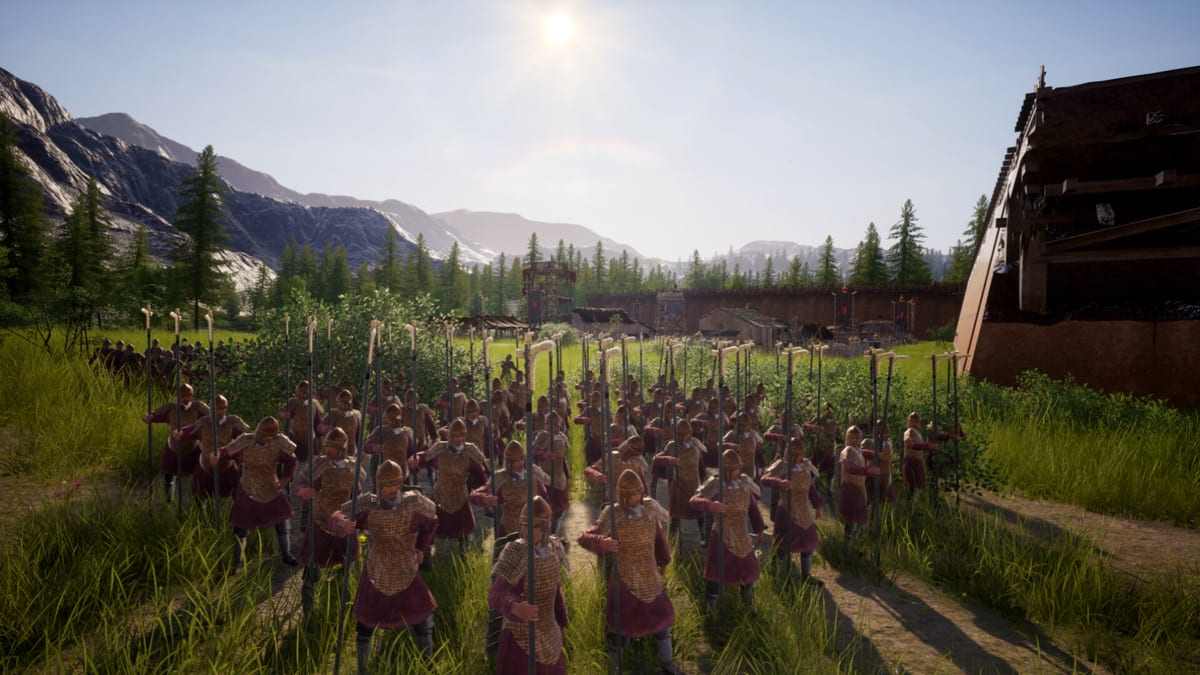
Workshops are where Mandate Order frontier camps become states that can arm defenders and field siege engines. Digital Sky’s production model is deliberately physical: workshops pull inputs from warehouses and storage within range, consume peasant labor for each crafting cycle, and output finished goods that sit in local storage until freight stations and courier posts move them to armories, construction sites, or trade depots. There is no global crafting menu that teleports ingots into spears. Early Access begins around August 12, 2026 on Steam and the Epic Games Store with workshop chains already tied to conscription and wall construction in official materials.
This page explains workshop types, placement logic, and the freight handoffs that separate thriving industry from decorative smithies. Use it alongside production chains, how to manage logistics, and military buildings when scaling from one smelter to a wartime arsenal.
What workshops do in the economy
Workshops sit in the middle of Mandate Order’s resource flow. Upstream, mines, logging areas, kilns, and fields create raw or semi-finished goods stored in typed warehouses. Downstream, armories, construction projects, trade routes, and other workshops consume finished outputs. If any link breaks—empty input warehouse, wrong freight priority, couriers conscripted away—the workshop idles while another district’s storage overflows.
Preview footage emphasizes readable feedback: stalled workshops usually mean a logistics problem you can trace, not random production rolls. Treat idle smithies as invitations to open the freight panel, not to build duplicate workshops farther from ore.
Common workshop categories
Exact building names may shift during Early Access balance passes, but preview and store descriptions consistently group industry into functional families:
Smelting and metalworking
Workshops processing ore into ingots, tools, weapons, and armor components. These structures anchor military readiness. Polearm heads, arrowheads, shield fittings, and lamellar plates flow from metal workshops into armories before how to conscript can assign troop types.
Metal workshops demand steady ore freight from mine-side warehouses. A smelter placed for scenic cliff views but fed from a distant mine will idle every time couriers prioritize grain during harvest.
Woodworking and timber crafts
Timber workshops produce beams for construction, shield boards, bow staves, siege engine components, and fuel products depending on build version. Mandate Order’s freeform construction consumes large quantities of wood for homes, roads, and walls, so timber workshops compete with military output for the same logs.
Place timber yards near forest access and road spines leading to both construction warehouses and armories. Splitting input and output storage—logs on one side of the road, finished goods on the other—reduces courier confusion documented in warehouses and storage.
Clay, stone, and masonry processing
Brick and stone workshops feed wall segments, towers, and gatehouses described in walls and siege. Siege seasons spike stone demand precisely when you also want more archers and polearms, creating labor and freight contention.
Pre-stock masonry outputs in warehouses along the wall line before declaring war, not after battering rams appear. Stone workshops are throughput buildings; they cannot compensate for missing freight capacity overnight.
General craft and trade goods
Some workshops produce non-military goods for diplomacy and policy trade routes or internal satisfaction items. These chains still obey local storage rules. Trade income does not help if finished goods cannot reach the merchant depot because couriers are hauling ore.
During mobilization, pause low-priority craft routes in freight stations so military workshops keep inputs flowing. Luxury goods are the first freight to cut when armories dip below threshold.
Placement principles for workshop districts
Freeform build allows workshops on varied terrain, but industry districts succeed on flat ground, wide roads, and symmetric storage.
Build an industrial spine: input warehouses facing workshops on one side, output warehouses on the other, with a courier post at the intersection. Branch secondary paths to mines and forests instead of forcing all ore through a residential plaza.
Keep workshops downwind or downstream of housing clusters when previews show morale effects from smoke or noise. Exact penalties may change in Early Access, but separating industry from fresh housing costs little land and prevents satisfaction bleed.
Reserve expansion pads beside the spine for additional smelters and forges. Deleting farms to squeeze another workshop behind your first wall ring trades food security for marginal metal output—a poor exchange before granaries are proven.
Workshop inputs and storage types
Workshops consume from typed storage. Mixing goods incorrectly—food beside ore with poor rotation, weapons in general warehouses too far from barracks—creates silent failures.
Verify three ranges before declaring a workshop online:
- Input warehouse within pull range with the correct good category stocked.
- Output warehouse or freight demand point ready to accept finished goods without backing up production.
- Courier path with enough free couriers to complete one full cycle during peak season.
The logistics diagnostics tool on the wiki mirrors this checklist interactively; until then, trace routes manually using how to manage logistics.
Workshop to armory handoff
Military gear must reach armories before conscription assigns kits to units. Workshops are not armories; storing spears in a general warehouse beside the smelter does not satisfy barracks pull rules.
Configure freight from workshop output warehouses to armory demand slots before raising large barracks complexes. Preview battles show cities losing sieges with idle smithies and empty armories simultaneously—a freight gap, not a production gap.
Place armories between workshop districts and defensive lines so wartime reinforcement follows short paths. Read military buildings for armory-specific range notes and troop types for which gear categories each unit needs.
Labor contention and seasonal timing
Workshops share peasant labor with farms, construction, hauling, and rituals. Spring planting and autumn harvest shrink effective workshop uptime even when freight is perfect.
Schedule heavy construction—new smelters, road upgrades, wall segments—outside harvest peaks when possible. Retainers from Mohism, Legalism, or Agriculturalism in the retainers hub may shift labor efficiency, but none eliminate seasonal calendars.
Conscription drains the same pool. Mobilizing too many smiths-as-soldiers stops ingot production while armories still demand resupply. Balance industry headcount against barracks plans using conscription readiness thinking: gear stock first, banners second.
Workshop failures and fixes
Idle workshop, full nearby warehouse: Input type mismatch or range failure—move correct storage into pull range or fix freight demand category.
Idle workshop, empty upstream mine: Production starved at source; fix mining hauls before duplicating smelters.
Output backlog, stalled production: Output warehouse full or missing freight off-take; add demand routes to armories or construction stores.
Everything works until harvest: Courier starvation; add courier posts or pause luxury freight before autumn.
Gear exists but conscription blocked: Goods in wrong building class; route finished weapons to armories, not general stores.
Scaling workshops into mid-game
Mid-game cities duplicate workshop spines rather than mega-factories. Two modest industrial districts fed by separate mines survive raid damage better than one hilltop complex with a single road.
Integrate workshops with map planning: capture ore nodes with freight plans already drawn, not after enemies camp the mine entrance.
Link to build for early-game sequencing and systems when trade treaties add new export goods that need workshop capacity.
Related guides
- Production chains for full input-output maps.
- Warehouses and storage for typed storage configuration.
- How to manage logistics for freight troubleshooting.
- Military buildings for armory and barracks placement.
- Buildings hub for livelihood structures that supply workshop labor.
Workshops turn Mandate Order maps into arsenals, but only when ore becomes ingots, ingots become spears, and spears physically sit in armories your barracks can reach. Build industry on spines, not souvenirs.
Frequently Asked Questions
Quick answers drawn from Early Access systems and common player questions.
Why does my workshop idle despite ore on the map?
Ore must sit in a warehouse within workshop pull range, or freight must move it there. Global map presence does not count—only stored, reachable goods do.
Can workshops store finished weapons directly?
Workshops output to local storage, but conscription pulls from armories. Route military goods to armory demand via freight stations, not general warehouses alone.
How many workshops should a frontier city run?
Start with one metal and one timber chain proven through a full seasonal cycle. Duplicate only after couriers and armory freight keep up during harvest load.
Do workshops need roads?
Yes. Couriers and peasants follow roads you lay. Workshops without road access to input and output storage behave like isolated decorations.
Which guide covers full chain diagrams?
See production chains for end-to-end maps from mines to armories, and how to manage logistics when chains stall mid-route.