Warehouses and Storage in Mandate Order
Configure freight, couriers, and road networks so materials actually reach workshops and armories
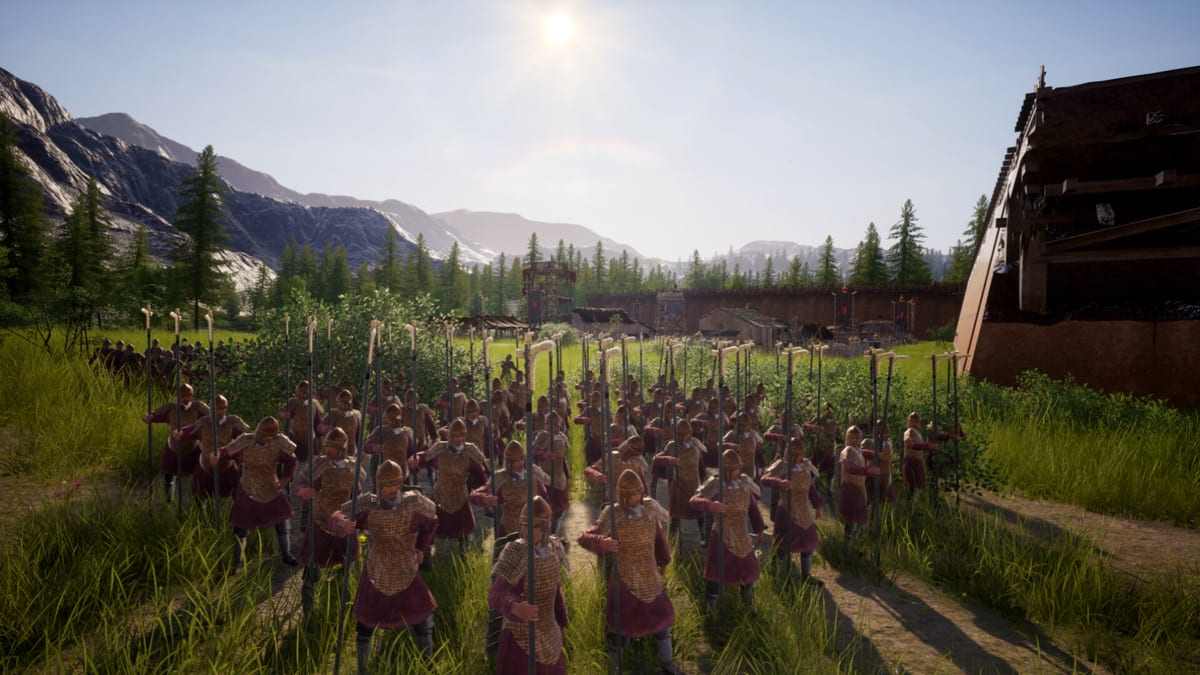
Mandate Order refuses the comfort of a global inventory bar. Every bundle of ore, grain, or spearheads exists in a building until your logistics move it. Digital Sky uses warehouses, freight stations, courier posts, and roads to turn storage into gameplay rather than UI abstraction. Misconfigured storage is one of the most common preview failure stories: a city that technically produces weapons yet cannot conscript because gear sits in the wrong warehouse across a valley.
This guide explains how to plan warehouses and storage for Early Access, tie them into production chains, and avoid the freight mistakes that mimic resource shortages.
Non-global storage in practice
When a mine finishes a haul, that ore lives in a local stockpile until a job moves it. Workshops consume only what reaches their input points. Armories accept only what couriers deliver down configured routes. There is no hidden teleport between distant buildings.
That design aligns with the developer loop: identify problems, plan construction, watch resource flow, receive feedback. Storage panels are diagnostic tools. If a number looks healthy globally but troops lack gear, the problem is almost always geographic.
Players coming from city-builders with magical inventories should retrain habits early. The opening build order deliberately introduces warehouses before heavy military industry.
Warehouse roles and specialization
Rather than one monument warehouse, most strongholds run specialized sites:
- Food stores near fields and housing consumption.
- Raw yards by mines, logging, and clay or stone sources.
- Industrial buffers beside workshop rows.
- Armory lanes adjacent to conscription buildings.
- Construction depots near wall projects and siege repairs.
Specialization simplifies freight rules. A freight station that tries to serve every good type to every building often sends timber to a bow workshop while polearm smiths idle.
Use city layout to keep these nodes on short road spines. Distance is a hidden storage penalty because it consumes courier time.
Freight stations and supply-demand links
Freight stations route goods based on supply and demand configuration shown in preview materials. Think of them as valves between warehouses and consumers:
- A source warehouse registers available stock.
- A freight station reads demand from target buildings or downstream warehouses.
- Couriers execute moves along valid roads.
Misconfiguration usually means correct global totals but wrong edges in the graph. Fix demand before building duplicate mines.
Test new routes by pausing conscription and watching a single good type move from source to armory. If test moves fail, expand roads or couriers before scaling production.
Courier posts and transport capacity
Courier posts increase hauling capacity by assigning workers to transport tasks. Under-building couriers is equivalent to under-building power plants in other games: every upstream step backs up.
Add courier posts when:
- Warehouse fill levels oscillate but consumers still starve.
- Construction projects stall despite full depots nearby.
- Raid recovery requires simultaneous wall stone and weapon moves.
- Map expansion doubles average trip length.
Couriers compete with other labor pools. Pulling too many peasants into hauling during harvest hurts fields; pulling too few hurts armories. Seasonal timing from the guides hub matters here.
Roads as storage latency
Roads are not decoration. Indirect paths through gates, markets, or narrow canyons multiply trip time. Siege breaches that break a single bridge can sever an armory from workshops even if walls still stand elsewhere.
Build redundant spines for critical chains:
- Primary armory lane from workshops inside walls.
- Secondary emergency route via a sally gate for wartime rerouting if previews allow.
- Separate food loop so military freight never starves kitchens accidentally.
Map knowledge from map guides informs which redundant routes are worth the stone cost.
Priorities during peace and war
Peaceful expansion favors feeding industry and construction. War shifts demand toward weapon kits, repair stone, and fire arrows or equivalent consumables shown in siege previews.
Prepare toggle-friendly freight priorities before raids arrive, not during ladder contact. Mandate Order invasions are real-time; pausing to rewrite every warehouse rule mid-battle is costly.
Wall repair chains intersect here: stone and timber for walls and siege structures must have depots near wall segments under attack or couriers will dump materials centrally while the outer gate crumbles.
Storage mistakes with readable symptoms
Full warehouse, starving workshop: Output stuck because downstream full or demand not registered. Clear downstream or raise priority on the consumer hop.
Empty armory, busy smiths: Finished goods pile in workshop local storage without armory freight. Add or fix a station targeting the armory.
Everything slow, no errors: Courier under-capacity or roads too long. Add posts or shorten layout.
Post-siege production collapse: Couriers reassigned to cleanup while farms still need haulers. Rebalance labor before conscripting again.
Developer press pieces use exactly these scenarios to explain why logistics is city-building pressure, not optional complexity.
Integration with conscription and combat
Armory storage is the conscription gate. See units overview for troop gear requirements. Storage planning must cover mixed kits: shields for one unit type, bows for another, not only whichever weapon is easiest to produce.
After large battles, gear returns through loot or salvage systems if previews include them; until confirmed in patch notes, assume you must reproduce kits from workshops. Storage plans need post-battle refit bandwidth.
Buildings reference and tools
Exact warehouse capacities, freight UI labels, and upgrade paths belong in the buildings reference as Early Access stabilizes. For checklist workflows, watch tools for freight audit templates.
Related guides
- Production chains for what must move through storage.
- Opening build order for early warehouse timing.
- City layout for district placement.
- Build hub for the full construction overview.
In Mandate Order, a warehouse is not where goods go to disappear. It is where goods wait for you to prove your city can carry them.
Frequently Asked Questions
Quick answers drawn from Early Access systems and common player questions.
Are Mandate Order resources shared globally?
No. Materials exist in specific buildings until couriers move them along roads according to warehouse and freight station configuration.
What do freight stations do?
Freight stations connect supply and demand between warehouses and consumers such as workshops or armories, determining which goods move where.
Why add courier posts?
Courier posts increase transport capacity by assigning workers to hauling. Without enough couriers, warehouses stay full while front-line buildings starve.
How many warehouses should I build?
Build specialized warehouses near farms, mines, workshops, armories, and wall projects rather than one distant central pile that lengthens every trip.